Buying property in St. Kitts & Nevis has become one of the smartest decisions for investors, retirees, expats, and families looking for a peaceful life in the Caribbean. With its stable government, stunning landscapes, favourable tax environment, and growing real estate market, the dual-island nation is now considered a prime destination for international property buyers.
Whether you are searching for a luxury villa, a beachfront vacation home, an income-generating rental property, or a relocation home, this comprehensive guide will walk you through every step of the buying process—from legal requirements to financing options, costs, and ownership benefits.
By the end of this article, you’ll have a clear understanding of how to successfully purchase property in St. Kitts & Nevis and avoid common pitfalls.
Why Buy Property in St. Kitts & Nevis?
St. Kitts & Nevis offers advantages that few other Caribbean nations can match. Real estate buyers are drawn to the island for several reasons:
1.1 Strong Real Estate Market
The government has invested heavily in tourism infrastructure, attracting high-end buyers and investors. Demand for vacation homes and rental units has steadily increased, especially around Frigate Bay, Christophe Harbour, and Nevis Peak.
1.2 Safe and Stable Investment
The country has a long-standing reputation for political stability, economic growth, and transparent legal systems based on British common law. This gives foreign buyers confidence in property ownership and long-term security.
1.3 Favourable Tax Environment
St. Kitts & Nevis has:
No income tax
No capital gains tax
No inheritance tax
This tax-friendly approach makes it one of the most attractive destinations for real estate investment.
1.4 Citizenship by Investment (CBI) Opportunities
One of the world’s most reputable CBI programs allows buyers of approved real estate to qualify for second citizenship. This comes with visa-free access to numerous countries and long-term financial security.
1.5 Superior Lifestyle
With pristine beaches, lush mountains, modern amenities, and a relaxed island lifestyle, St. Kitts & Nevis is ideal for retirement, remote work, or seasonal living.
Can Foreigners Buy Property in St. Kitts & Nevis?
Yes—foreigners can purchase real estate freely. However, there are certain rules to follow.
2.1 Alien Landholding License (ALHL)
Foreign buyers are required to obtain an Alien Landholding License, unless purchasing property within a government-approved development or CBI program, where the license may not be required.
2.2 License Processing Time
The ALHL typically takes 6–12 weeks to process.
2.3 What the License Allows
Once approved, the license grants full ownership rights, including:
Reselling the property
Renting it out
Transferring ownership
2.4 Exceptions
Some resort developments and CBI-approved projects allow buyers to purchase without applying for the license, simplifying the process.
Step-by-Step Process to Buying Property in St. Kitts & Nevis
The following step-by-step breakdown explains the entire buying journey from initial research to receiving the title deed.
Step 1: Define Your Purpose and Budget
Before starting your property search, clarify your objectives.
3.1 Determine Why You’re Buying
Vacation home
Permanent residence
Investment rental
Citizenship by investment
Land for development
3.2 Set Your Budget
Consider:
Property price
Legal fees
Government taxes
Furniture or renovation costs
Ongoing maintenance
Property prices vary widely—from affordable apartments in Basseterre to ultra-luxury villas overlooking Christophe Harbour.
Step 2: Choose Your Ideal Location
St. Kitts & Nevis offers diverse areas suited to different needs.
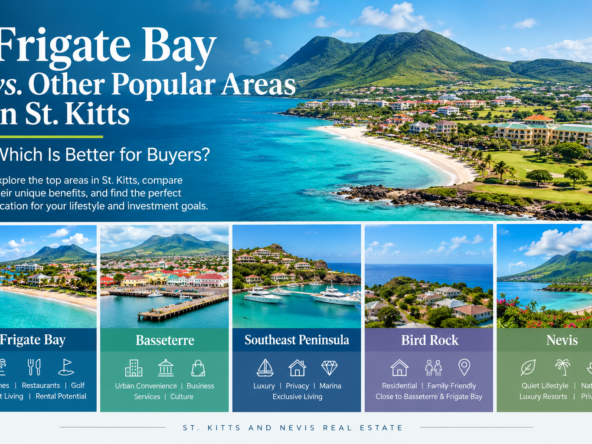
3.2.1 Popular Areas in St. Kitts
Frigate Bay: High demand for rentals, vibrant community
Christophe Harbour: Luxury villas, marina lifestyle
Basseterre: Urban living, close to services
Half Moon Bay & White House Bay: Premium beachfront properties
3.2.2 Popular Areas in Nevis
Nevis Peak slopes: Mountain-view villas
Charlestown: Charming colonial community
Oualie Beach: Quiet beachfront properties
Hamilton Estate: Historic elegance, residential retreats
Choosing the right area ensures your property meets your lifestyle or investment goals.
Step 3: Work with a Trusted Real Estate Agency
Because you’re buying in a foreign market, it is essential to work with a reputable and experienced real estate company—like SKNIH (St. Kitts & Nevis Island Homes)—that understands local laws, regulations, pricing, and negotiation practices.
Benefits of Working with SKNIH
Access to exclusive listings
Guidance through licensing & legal requirements
In-person or virtual tours
Professional negotiation
Support from search to closing
A trusted agency ensures a smooth and stress-free buying experience.
Step 4: Property Viewing and Shortlisting
Once your agent understands your needs, they will recommend suitable properties.
4.1 Virtual Tours
Great for international buyers who cannot visit immediately.
4.2 In-Person Viewing
If you can visit, explore:
Neighbourhoods
Road access
Nearby amenities
Noise levels
Beach access
Security
4.3 Evaluate Long-Term Potential
Ask your agent about:
Rental income projections
Future development plans
Seasonal tourism demand
Resale value
Step 5: Make an Offer and Sign the Purchase Agreement
When you find your ideal property, it’s time to make an official offer.
5.1 Negotiating the Price
Your agent will help you negotiate based on:
Market trends
Property condition
Comparable sales
Seller motivation
5.2 Signing the Sales Agreement
Once terms are agreed, a Sales & Purchase Agreement (SPA) is drafted.
This document includes:
Final price
Deposit amount
Closing date
Conditions of sale
Included furniture & fixtures
Payment terms
5.3 Deposit Payment
Typically, buyers pay a 10% deposit, which is held in escrow until closing.
Step 6: Hire an Attorney and Begin the Legal Process
It is mandatory in St. Kitts & Nevis to use a local attorney to complete the transaction.
6.1 Attorney Responsibilities
Your lawyer will:
Perform due diligence
Verify title deeds
Apply for your Alien Landholding License (if required)
Review contracts
Ensure compliance with local laws
Register the property.
6.2 Due Diligence Checks
The attorney will investigate:
Property ownership history
Boundary and survey information
Whether liens or encumbrances exist
Any outstanding taxes or charges
This protects you from future legal complications.
Step 7: Apply for the Alien Landholding License (If Required)
7.1 Required Documentation
Copy of passport
Police clearance / background check
Bank reference letter
Two character references
Property details & purchase agreement
7.2 Application Time
Approval usually takes 6–12 weeks, depending on document completeness and government processing speed.
7.3 Properties That Don’t Require the License
Some properties within citizenship-by-investment developments are exempt, offering a smoother buying process.
Step 8: Final Payment and Closing
Once all legal requirements are met, you proceed to closing.
8.1 Closing Payments Include
Remaining property balance
Legal fees
Government stamp duty
Insurance (optional)
Registration fees
8.2 Title Transfer
Your attorney will handle:
Final registration
Transfer of deed
Updating the land registry
Once completed, you become the official owner of the property.
Ownership Options for Foreign Buyers
Depending on your goals, there are multiple ways to own property.
4.1 Freehold Ownership
The buyer owns the property and land outright.
This is the most popular and secure ownership model.
4.2 Leasehold Ownership
Some developments offer 49–99 year leases.
4.3 Fractional Ownership
Ideal for vacation homes and investment properties with shared usage.
Costs Associated with Buying Property
When purchasing property in St. Kitts & Nevis, it’s important for buyers to understand all the associated costs beyond the listing price. The legal fees are typically one of the first expenses you will encounter, usually amounting to around one to two percent of the property’s purchase price. These fees cover the attorney’s work in conducting due diligence, preparing legal documents, verifying title ownership, and completing the transaction. In addition to legal fees, buyers are required to pay stamp duty, which generally ranges between six and ten percent, depending on the property type, location, and negotiation terms between the buyer and seller.
Another significant expense is the Alien Landholding License fee, which is applicable to most foreign buyers and usually represents about ten percent of the property’s value. This fee may be waived when purchasing certain government-approved real estate under the Citizenship by Investment program. Real estate agent fees are normally covered by the seller, meaning buyers rarely pay commission directly. However, buyers should still budget for additional smaller costs, including surveyor services, property appraisals, home inspections, and any renovation or furnishing expenses they may need after the purchase. Working with a reputable agency like SKNIH ensures you receive a complete and transparent cost estimate before moving forward.
Financing Options for Buyers
Although many international buyers choose to purchase property in St. Kitts & Nevis outright with cash, there are several financing options available for those who prefer not to pay the full price upfront. Local banks in St. Kitts & Nevis offer mortgage packages to non-residents, though these typically require a larger down payment than domestic mortgage programs. Most lenders expect international buyers to put down between 40% and 60% of the property’s purchase price, with repayment terms usually extending over ten to fifteen years. Interest rates may vary depending on the buyer’s financial background and the chosen bank.
International banks can also be an option, particularly for investors who have established banking relationships or overseas financial ties. These institutions may provide easier access to financing, though buyers should always compare interest rates and repayment terms. Another attractive option is developer financing, available for many newly constructed or off-plan developments. These payment plans are designed to be flexible and convenient, allowing buyers to pay instalments throughout the construction period or over a number of years. An experienced local agent can help you evaluate which financing method best aligns with your investment goals, residency plans, and long-term financial strategy.
Benefits of Buying Property in St. Kitts & Nevis
Purchasing real estate in St. Kitts & Nevis comes with a number of compelling advantages. One of the primary benefits is the strength of the rental market. The islands attract a unique mix of tenants, including medical students attending Ross University, long-term expats working in hospitality or government sectors, tourists seeking vacation rentals, and remote workers looking for extended stays in a warm, scenic location. This diverse mix creates excellent opportunities for both long-term and short-term rental income, making the islands an appealing destination for investors.
Property values in St. Kitts & Nevis have also enjoyed steady appreciation over the years, driven by rising tourism, new infrastructure, and continued foreign investment. Buyers also have the opportunity to obtain second citizenship through the country’s reputable Citizenship by Investment program when purchasing approved properties. This offers benefits such as visa-free access to numerous countries, increased mobility, and long-term security for families. Beyond financial gains, St. Kitts & Nevis offers an unmatched lifestyle — tranquil beaches, lush mountains, a close-knit community, and a safe environment make the islands ideal for retirement, seasonal living, or full-time relocation.
Common Mistakes to Avoid
Although the process of buying property in St. Kitts & Nevis is straightforward, there are several common mistakes buyers should avoid. One of the most important is failing to hire a qualified local attorney. Real estate laws and procedures differ from country to country, and a local legal expert ensures that contracts, title checks, and closing procedures are handled correctly. Skipping proper due diligence is another frequent misstep. Buyers should always ensure that the property has a clean title, accurate boundary survey, and no outstanding liens or tax obligations.
Choosing the wrong location can also impact long-term satisfaction or rental performance. Every neighbourhood has its own advantages, so buyers should take time to understand factors such as rental demand, accessibility, noise levels, and surrounding amenities. Rushing the process is another risk. Buyers should be prepared for the time required to obtain licenses, conduct inspections, and finalize the sale. Finally, working with an inexperienced or unlicensed agent can lead to misinformation or complications. Partnering with a reputable real estate agency like SKNIH ensures a smooth, transparent, and well-guided buying experience.
Final Thoughts: Is St. Kitts & Nevis Right for You?
St. Kitts & Nevis presents a rare blend of financial opportunity, personal freedom, and tropical beauty. Whether you are considering a second home, a permanent relocation, a high-yield rental investment, or an opportunity to secure citizenship for your family, the islands offer something for every type of buyer. The real estate market is strong, tourism continues to grow, and the country’s tax-friendly environment makes it a safe and rewarding place to invest long-term.
With professional guidance from a trusted agency like SKNIH (St. Kitts & Nevis Island Homes), buyers can navigate the entire process smoothly and confidently. From choosing the right neighbourhood to handling legal requirements and closing the purchase, SKNIH ensures that every step of your property journey is well-managed and stress-free. If you’re ready to explore your options, we’re here to help you find the perfect Caribbean property.
Frequently Asked Questions
1 Can foreigners buy land in St. Kitts & Nevis?
Yes, foreign buyers can purchase land with an Alien Landholding License.
2 Is it safe to buy property remotely?
Yes—many international buyers’ complete purchases remotely with trusted agents and attorneys.
3 Are rental incomes taxed?
There is no income tax, making rental properties highly profitable.
4 Can I resell my property?
Yes, freehold ownership allows resale at any time.
5 How long does the entire buying process take?
Typically, 2–4 months, depending on legal requirements and license processing.